
To empty a porta potty in Washington, you’ll need a vacuum truck with 400-600 CFM suction power and proper PPE including gloves, goggles, and N95 masks. Position your vehicle adjacent to the unit, insert the 3-inch vacuum hose into the holding tank, and activate the pump. You must dispose of waste only at DC Water-approved treatment facilities with current permits, and maintain detailed disposal records to avoid fines of up to $25,000. Understanding the complete servicing process guarantees regulatory compliance and prevents health hazards.
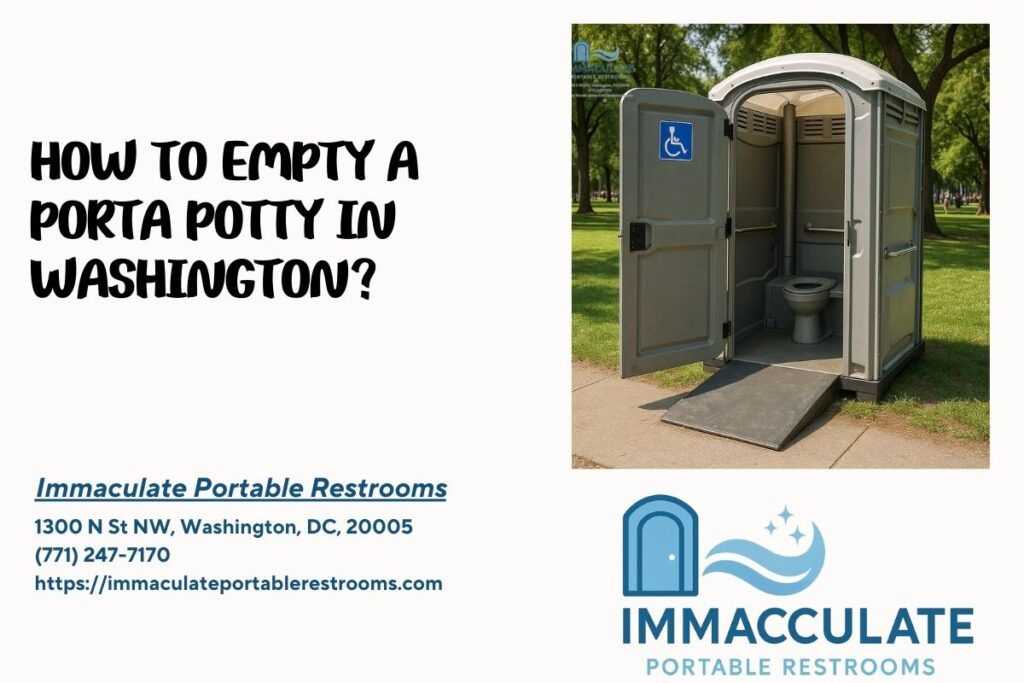
Before you attempt to empty a porta potty, you’ll need to understand how its waste containment system works.
The unit features a holding tank beneath the toilet seat that collects both solid and liquid waste. This tank is sealed to prevent odors and contamination.
You’ll find a vent pipe that releases gases while maintaining pressure balance. The holding tank connects to an external access point, typically at the unit’s rear, where you’ll insert pumping equipment.
Most systems hold between 60-70 gallons of waste. Chemical treatments inside the tank break down solids and control bacterial growth.
You must recognize the tank’s fill indicators to prevent overflow. Understanding these components guarantees you’ll execute the emptying process safely and efficiently while minimizing exposure to hazardous materials.
See also: portable toilet rental service in Washington
When you examine a porta potty’s holding tank, you’ll find it operates on a gravity-fed system that channels waste from the toilet bowl through a one-way flap valve. This valve prevents odors and contents from returning to the bowl area while allowing waste to flow downward into the sealed containment chamber.
The holding tank’s design includes these critical components:
The tank’s sealed construction prevents leakage during transport and use.
You’ll notice that the pump-out connection point is located at the tank’s lowest point to ensure efficient waste removal.
Porta potty waste falls into two distinct categories: blackwater (human waste and toilet paper) and the chemical additives that break down solids and control bacterial growth.
You’ll encounter blue- or green-dye-based chemicals in most standard units. These formaldehyde-free solutions contain biocides that neutralize odors and prevent bacterial multiplication. They also include surfactants that break down waste paper and solid matter for easier pumping.
Modern porta potties use enzyme-based or bacterial treatments as eco-friendly alternatives. These biological additives accelerate decomposition through natural processes rather than harsh chemicals.
You must understand which treatment type you’re handling before disposal. Chemical treatments require specific disposal protocols at designated waste treatment facilities.
Never mix different chemical types during the emptying process, as reactions can produce hazardous fumes or compromise waste breakdown effectiveness.
Your personal protection is the top priority when handling portable restroom waste. Before you begin the emptying process, you’ll need proper protective equipment and a clear understanding of the hazards involved.
Essential safety equipment includes:
You’ll also want to secure the work area, check for structural damage to the unit, and guarantee adequate ventilation.
Never attempt emptying without complete protective gear, regardless of experience level.
Before handling any porta potty waste, you must don complete personal protective equipment to shield yourself from biological hazards and chemical exposure.
Start with nitrile or rubber gloves rated for chemical resistance—never use standard latex gloves. Wear a full-body coverall or dedicated work clothing that you’ll wash separately. Safety goggles or a face shield protect against splashes reaching your eyes, while a respirator mask guards against harmful fumes and airborne pathogens.
Steel-toed rubber boots with slip-resistant treads are crucial because surfaces can become slippery during pumping operations.
If you’re working in direct sunlight on Washington’s National Mall or in other exposed areas, wear a hard hat for additional protection. Keep a spare set of PPE available in case of contamination during service.
When servicing portable restrooms, you’ll encounter biological hazards that pose serious health threats if proper precautions aren’t followed.
Direct contact with human waste exposes you to dangerous pathogens including E. coli, hepatitis A, and norovirus. These microorganisms can enter your body through contaminated hands, splashes to mucous membranes, or inhalation of aerosolized particles.
Key health risks include:
You must maintain strict hygiene protocols throughout the servicing process to prevent cross-contamination and disease transmission.
Beyond protecting yourself from health hazards, you’re legally obligated to handle and dispose of portable restroom waste in accordance with Washington’s environmental regulations.
The DC Water and Sewer Authority (DC Water) requires that all septage be discharged only at approved treatment facilities with proper permits. You’ll need a licensed hauler certificate to transport waste, and your disposal records must be maintained for inspection.
Washington’s Department of Energy and Environment (DOEE) enforces strict penalties for illegal dumping, including fines up to $25,000 per violation. Your waste must be transported in DOT-approved tanks with proper placarding.
Furthermore, you’re required to file quarterly reports detailing disposal volumes and locations. Non-compliance can result in permit revocation and criminal charges.
Under Washington state law, you must comply with Chapter 173-308 WAC, which governs the collection, transportation, and disposal of septic tank and porta potty waste.
This regulation ensures proper sewage handling to protect public health and groundwater resources.
You’ll need to follow these key requirements:
Washington’s Department of Ecology enforces these standards through regular inspections.
Violations result in substantial fines and potential license suspension.
You’ll protect your business by partnering with compliant disposal facilities.
State-level regulations establish the foundation, but Washington, DC imposes its own specific requirements that carry severe penalties for non-compliance.
You’ll face fines up to $25,000 per violation for improper waste disposal under DC Municipal Regulations Title 21. The Department of Energy and Environment (DOEE) requires specific permits for waste transport and mandates that waste be discharged only at approved facilities.
You must maintain detailed manifests documenting every disposal, including dates, volumes, and facility certifications. Violations include dumping in unauthorized locations, failing to secure proper permits, and inadequate recordkeeping.
DOEE conducts random inspections and aggressively investigates complaints. For commercial operators like Immaculate Portable Restrooms, you’ll need to renew your solid waste facility permit annually and comply with strict vehicle identification requirements during transport operations.
Professional porta potty servicing requires seven vital pieces of equipment to safely and efficiently complete the job.
You’ll need a vacuum truck with sufficient tank capacity, heavy-duty waste hoses, a fresh water supply, and non-splash deodorizing chemicals. Personal protective equipment is non-negotiable for this work.
Essential PPE includes:
You’ll also need hand tools, such as wrenches, to secure connections and cleaning supplies for exterior maintenance.
A reliable flashlight helps inspect tank levels in low-light conditions.
Professional-grade equipment ensures you meet Washington, DC, sanitation standards while protecting you from biological hazards during servicing.
While handheld pumps can’t handle porta potty waste volumes, specialized vacuum trucks equipped with high-capacity pumps are the industry standard for efficient servicing.
These trucks feature 300-500 gallon waste tanks with vacuum systems generating 400-600 CFM of suction power. You’ll find they’re equipped with 3-inch diameter hoses that can evacuate a standard unit in 3-5 minutes.
The truck’s key components include a sealed waste tank, a rotary-vane vacuum pump, a freshwater tank (typically 100 gallons), and a chemical dispensing system.
You’ll operate the vacuum through external controls while monitoring pressure gauges to prevent overflow. Most service vehicles include onboard generators, hose storage, and tool compartments.
The waste tank connects directly to approved disposal facilities through specialized discharge systems, ensuring proper waste handling throughout the entire service process.
Beyond primary vacuum systems, you’ll need vital manual tools to handle equipment failures and challenging service conditions.
These backup items ensure you can complete servicing even when the primary equipment malfunctions or site conditions prevent truck access.
Essential manual tools include:
You’ll also need personal protective equipment: heavy-duty gloves, splash goggles, and disposable coveralls.
Keep spare hoses, clamps, and connectors readily accessible for emergency repairs during service routes.
Each porta potty servicing follows a systematic seven-step sequence that protects both workers and clients from contamination hazards.
First, you’ll position the vacuum truck adjacent to the unit and don your protective equipment.
Next, you’ll open and access the porta potty door to assess contents and damage.
Then, you’ll insert the vacuum hose into the holding tank through the toilet opening.
Fourth, you’ll activate the vacuum pump to extract all waste and liquids.
Fifth, you’ll spray-clean interior surfaces with a high-pressure hose and a disinfectant solution.
Sixth, you’ll refill the holding tank with fresh water and deodorizing chemicals.
Ultimately, you’ll restock consumables, including toilet paper, hand sanitizer, and urinal blocks, before securing the unit.
This methodical approach guarantees thorough sanitation at every Washington, DC location.
Before initiating waste extraction, you must conduct a thorough exterior and interior assessment of the porta potty to identify potential hazards and operational issues.
Check for structural damage, including cracks in walls or doors that don’t seal properly. You’ll want to verify the holding tank’s fill level through the inspection window to determine pumping requirements.
Next, prepare your equipment systematically:
Ensure you have all necessary tools available—hose connections, sanitizing chemicals, and cleaning implements.
Open the unit’s door slowly to check for obstructions before beginning extraction procedures.
Connect your vacuum truck’s waste hose to the porta potty’s holding tank outlet valve, ensuring a tight seal to prevent spillage during extraction.
You’ll need to activate the vacuum pump gradually, starting at low pressure to prevent splashback or system damage. Monitor the waste levels in your truck’s tank continuously to avoid overfilling.
Always position yourself upwind of the unit during pumping operations. Keep the vacuum running until you’ve removed all liquid and solid waste from the holding tank.
Once emptied, disconnect the hose carefully and secure the outlet valve immediately. Rinse the hose thoroughly before moving to your next unit.
Throughout this process, maintain your PPE and stay alert for any leaks or equipment malfunctions that require immediate attention.
After pumping out the waste, you’ll need to spray the interior surfaces with a high-pressure cleaning solution to remove residue and prevent bacterial buildup.
Focus on the unit’s walls, seat, and floor. Use a specialized porta potty cleaner that contains disinfectants and enzymes to break down organic matter.
Once you’ve thoroughly cleaned all surfaces, apply a fresh deodorizing treatment to the holding tank. This step’s crucial for odor control and user comfort.
Key cleaning supplies you’ll need:
Always wear protective equipment during this process.
The cleaning solution should remain in the tank for several minutes before you add fresh water and deodorizer.
The waste you’ve pumped from porta potties must go to designated sanitary facilities that meet federal and local regulations. In Washington, DC, you’ll transport the waste to approved wastewater treatment plants or septage receiving stations.
These facilities have proper equipment to process human waste safely and prevent environmental contamination.
Before disposal, you must confirm that your receiving facility holds current permits and follows EPA guidelines. You’ll need to maintain detailed records of each disposal, including date, volume, and facility name. This documentation guarantees compliance with DC Department of Energy and Environment requirements.
Never dump waste into storm drains, water bodies, or unauthorized locations. Violations result in severe fines and potential suspension of the business license.
Always follow your facility’s specific intake procedures and schedule appointments when required.
Washington, DC operates several authorized wastewater treatment facilities where you can legally dispose of porta potty waste.
You’ll need to transport waste to Blue Plains Advanced Wastewater Treatment Plant, the primary facility serving the district. Before disposal, you must verify your hauler’s license and complete the required documentation.
Follow these critical protocols when using approved facilities:
You’ll face significant penalties for improper disposal, including fines up to $10,000.
Always maintain disposal records for regulatory compliance and inspection purposes.
Once you’ve pumped waste from porta potties, you must transport it in DOT-compliant vacuum trucks that meet federal and local safety standards. Your vehicle requires proper placarding, sealed tank systems, and spill-containment equipment during transit.
| Requirement | Specification | Purpose |
|---|---|---|
| Tank sealing | Airtight closure with pressure relief | Prevents leaks and odor release |
| Placarding | Hazmat labels per DOT regulations | Identifies waste contents to responders |
| Spill kit | Absorbents, PPE, containment tools | Manages accidental releases |
| Vehicle inspection | Pre-trip and post-trip checks | Guarantees equipment integrity |
| Route planning | Avoid restricted zones, school areas | Minimizes public exposure risk |
You’ll need a valid commercial driver’s license and waste hauler permits. Maintain transport logs that document pickup locations, volumes, and disposal facility destinations to ensure regulatory compliance.
After delivering waste to an approved treatment facility, your service crew must sanitize each porta potty before returning it to service. This process ensures compliance with hygiene standards and user satisfaction.
You’ll need to thoroughly spray all interior surfaces with an EPA-approved disinfectant, paying special attention to high-touch areas such as door handles and toilet seats. Remove any debris and wipe down walls.
Essential restocking items include:
Check that ventilation screens remain clear and door mechanisms function properly. Document the service date on your maintenance log.
In Washington’s humid climate, you’ll want to verify that deodorizer levels are adequate to prevent odor buildup between services.
Proper surface sanitization requires thorough coverage of all interior surfaces to eliminate pathogens and prevent cross-contamination.
You’ll need to spray an EPA-registered disinfectant on all touchpoints, including door handles, latch mechanisms, and toilet seats—work from top to bottom, ensuring complete coverage of walls, urinal surfaces, and floor areas. Allow the disinfectant to remain wet for the manufacturer’s specified contact time—typically 5-10 minutes—to kill bacteria and viruses effectively.
Use a long-handled brush to scrub surfaces where waste residue has accumulated, paying special attention to crevices and seams. Rinse thoroughly with clean water to remove chemical residue.
In Washington’s humid climate, ensure proper ventilation during this process to prevent moisture buildup, which can encourage microbial growth.
Apply a final coating of deodorizing sanitizer before restocking supplies.
After surface sanitization, you’ll replenish the unit’s chemical tank and consumables to ensure proper operation.
The deodorizing and waste-breaking chemicals require precise measurement to guarantee effective decomposition and odor control. You’ll typically add 3-5 gallons of fresh water mixed with the manufacturer’s recommended chemical ratio.
Essential supplies to replace include:
You’ll verify that all dispensers function correctly and that the secure mounting brackets remain tight.
Verify that chemical levels reach the designated fill line, as indicated by the tank’s inspection window: document replacement quantities and chemical concentrations for maintenance records.
This systematic replenishment guarantees the porta potty remains hygienic and fully operational between service intervals.
Even experienced technicians can compromise safety and sanitation by overlooking fundamental emptying procedures. You’ll want to avoid these critical errors that can lead to contamination, equipment damage, or regulatory violations.
| Mistake | Consequence |
|---|---|
| Overfilling waste tank | Sewage backup and spillage |
| Skipping PPE protocols | Pathogen exposure risk |
| Improper hose connection | Environmental contamination |
You should never rush the vacuum process or disconnect hoses while pressure remains in the system. Always verify your dump station’s compatibility before disposal. Don’t neglect to sanitize all equipment contact points after each service call. Ultimately, you must document waste volumes and disposal locations to maintain compliance with Washington, DC regulations. These preventive measures protect both you and your clients.
When you mishandle porta potty waste, you’re exposing yourself and others to hepatitis A, E. coli, and norovirus—pathogens that thrive in human waste.
Direct contact with untreated sewage can lead to serious illness, making proper protective equipment non-negotiable.
Critical handling protocols include:
You must also sanitize all equipment immediately after emptying.
Contaminated tools spread pathogens between units, defeating the entire sanitation process.
Proper protective equipment means nothing if you bypass the safety protocols that keep you alive during waste removal.
You’ll face serious consequences when you skip ventilation checks before opening tanks—hydrogen sulfide and methane accumulate in confined spaces and can cause immediate loss of consciousness.
Never work alone; Washington’s occupational safety standards require an additional person during pumping operations who can respond to emergencies.
You must establish proper truck positioning on level ground before connecting hoses to prevent spillage and equipment failure.
Skipping pre-pump inspections of valves and seals leads to explosive releases of pressurized waste.
Don’t forget to lock out electrical components during maintenance—cross-contamination between waste and freshwater systems happens when you rush through connection procedures without verification.
You’ll need to empty porta potties every 2-3 days during significant events, depending on usage levels. High-traffic situations may require daily servicing. Monitor waste levels closely and schedule supplementary pump-outs when units reach 70% capacity to maintain sanitary conditions.
You shouldn’t empty a porta potty yourself. Washington requires certified waste haulers with proper licensing, specialized equipment, and training to safely handle human waste. It’s illegal and hazardous without certification, permits, and appropriate disposal facilities.
You’ll typically pay $75-$150 per unit for standard porta potty pumping in DC. Costs vary based on location accessibility, waste volume, and service frequency. We recommend scheduling regular maintenance to avoid emergency service fees, which run considerably higher.
Weather extremes significantly affect your emptying schedule. Summer heat accelerates waste decomposition and odor buildup, requiring more frequent service. Winter freezing can damage tanks and pumping equipment, so you’ll need antifreeze treatments and adjusted maintenance timing.
Yes, we offer emergency same-day pumping services in Washington, DC. If you’re experiencing an overflow or urgent sanitation issue, contact us immediately. We’ll dispatch a trained technician to promptly pump and service your unit.



© 2026 Immaculate Portable Restrooms. All Rights Reserved.