
When you use a porta potty in Washington, waste flows by gravity into a sealed holding tank at the base, where specialized chemicals break down solids and neutralize odors. The high-density polyethylene structure prevents leaks, while a ventilation pipe regulates pressure and disperses gases through the roof. Licensed operators service units regularly—extracting waste via vacuum trucks and replenishing chemicals—in compliance with WAC 246-272 regulations. Understanding the complete maintenance cycle and placement requirements guarantees you’ll appreciate the engineering behind these crucial facilities.
A standard porta potty consists of several interconnected systems that work together to provide sanitary facilities in locations without traditional plumbing.
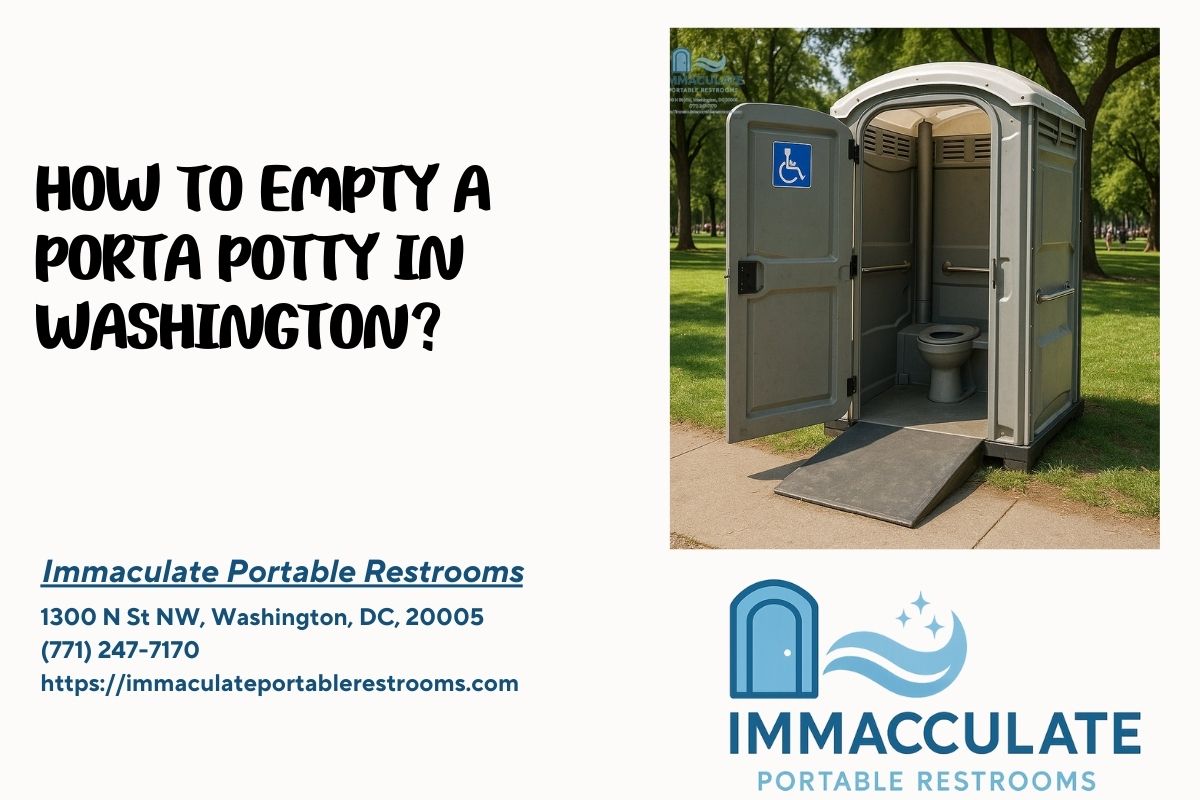
You’ll find the holding tank at the base, which stores waste and chemicals. The toilet seat assembly sits directly above this reservoir, featuring a non-splash design that minimizes contamination.
The urinal (in most units) connects to the same waste system through separate channeling. Ventilation pipes extend from the tank through the roof, creating airflow that reduces odors and regulates pressure.
The chemical treatment system uses specialized biocides and deodorizers to break down waste and control bacterial growth.
Modern units incorporate hands-free features, including foot-pump sinks and antimicrobial surfaces, maximizing hygiene while reducing physical contact points throughout the facility.
See also: portable toilet rental service near Washington DC
High-density polyethylene (HDPE) forms the primary construction material for portable restroom units due to its exceptional durability and chemical resistance properties.
You’ll find this thermoplastic polymer withstands UV exposure, temperature fluctuations, and chemical treatments that standard materials can’t endure. The seamless rotational molding process creates a one-piece structure, eliminating potential leak points and ensuring structural integrity.
Modern units incorporate reinforced floor panels to support concentrated weight loads, while textured surfaces prevent slipping.
You’ll notice strategically positioned ventilation systems integrated into the molded design, optimizing airflow without compromising stability. The non-porous HDPE surface resists bacterial growth and simplifies sanitation protocols.
Translucent roof panels harness natural light, reducing energy dependency. This engineered approach delivers a self-contained sanitation solution that’s both transportable and environmentally responsible.
While HDPE construction provides the external framework, the interior compartment incorporates standardized components that improve functionality within compact dimensions.
You’ll find a molded seat positioned at ergonomic height above the waste holding tank, typically offering 60-gallon capacity. The integrated urinal system channels liquid waste directly into the reservoir, maximizing efficiency. A non-splash deodorizer system neutralizes odors through chemical treatment, while ventilation pipes facilitate air circulation to prevent pressure buildup.
You’ll notice translucent roof panels that provide natural illumination without electrical requirements. The interior walls feature smooth, non-porous surfaces that resist bacterial growth and simplify sanitation protocols.
Spring-loaded door mechanisms guarantee secure closure, and internal occupancy indicators provide user privacy. These engineered features deliver reliable performance for Washington’s diverse event requirements and construction sites.
When waste enters the holding tank, gravity directs it through the toilet seat opening into a sealed reservoir that’s engineered to contain both liquid and solid materials.
The tank’s polymer construction guarantees structural integrity while preventing leakage and odor migration. You’ll find specialized chemical formulations within the reservoir that actively break down waste, neutralize odors, and accelerate decomposition processes.
The system incorporates a venting mechanism that regulates internal pressure while filtering exhaust gases through carbon-activated filters. This dual-chamber ventilation design prevents vacuum formation during emptying procedures.
The tank’s capacity typically ranges from 60 to 70 gallons, with visual indicators showing fill levels. Advanced models feature antimicrobial coatings on interior surfaces, reducing bacterial growth and extending service intervals between pump-outs.
The holding tank’s structural architecture employs high-density polyethylene (HDPE) walls with reinforced ribbing that distributes weight loads across the unit’s footprint.
You’ll find these tanks utilize seamless rotational molding techniques that eliminate potential leak points inherent in welded construction.
The interior geometry features strategically angled surfaces that direct waste flow toward extraction ports, enhancing pump-out efficiency during servicing.
Engineers incorporate graduated measurement indicators along interior walls, enabling precise capacity monitoring without opening the unit.
The tank’s foundation integrates chemical-resistant coatings that withstand corrosive deodorizer formulations while maintaining structural integrity across temperature fluctuations.
Venting systems built into the tank design create negative pressure zones that prevent odor escape while allowing adequate airflow.
This engineering approach guarantees you’re receiving sanitation infrastructure that optimizes operational longevity and performance consistency.
Chemical treatment systems transform raw waste into manageable effluent through carefully calibrated formulations that address both sanitation and odor control.
You’ll find biocides eliminating harmful bacteria while enzymatic compounds accelerate organic decomposition. Modern formulations incorporate non-formaldehyde solutions that break down waste without environmental harm.
The deodorizing agents you encounter utilize fragrance encapsulation technology, suspending scent molecules that activate upon contact with waste gases.
Blue dye serves multiple functions: it masks waste visibility, indicates chemical concentration levels, and signals when you need servicing.
Advanced formulations now include surfactants that reduce surface tension, improving waste flow and preventing buildup on tank walls.
Temperature-stable compounds guarantee consistent performance across Washington’s seasonal variations, maintaining efficacy whether you’re operating units during humid summers or freezing winters.
Strategic airflow management forms the foundation of porta potty odor control, with passive ventilation systems channeling contaminated air through roof-mounted vents that create continuous negative pressure within the unit.
You’ll find these vents strategically positioned to exploit thermal dynamics—warm air rises naturally, expelling odorous gases while drawing fresh air through lower gaps.
Advanced units integrate wind-driven turbine vents that amplify this exchange rate without requiring electrical power.
The synergy between chemical deodorizers and mechanical ventilation creates a dual-barrier approach: chemicals neutralize ammonia compounds at the source while airflow prevents their concentration.
In Washington’s variable climate, this system adapts automatically—increased solar heating during summer accelerates ventilation velocity, while sealed door gaskets prevent backdrafts during winter months, maintaining consistent odor suppression year-round.
When contaminated air remains stagnant, volatile organic compounds and hydrogen sulfide molecules accumulate to concentrations that overwhelm your olfactory receptors within moments.
You’ll find that strategically positioned roof vents create a continuous air exchange system through passive convection. Hot, odor-laden air naturally rises and exits through the top vent, while fresh air enters through lower intake points.
This pressure differential generates a chimney effect that cycles air every 3-5 minutes. Advanced units incorporate wind-catching vent designs that amplify airflow rates during breezy conditions.
You’re experiencing a mechanical system that dilutes odor molecules below detection thresholds rather than masking them. The ventilation architecture transforms your porta potty into a dynamic environment where contaminated air can’t establish equilibrium, maintaining breathable conditions throughout extended use periods.
Beyond passive ventilation, your porta potty employs a dual-layer defense system combining enzymatic treatments with pH manipulation to neutralize waste-generated compounds at the molecular level.
Specialized bio-enzymatic formulations break down organic matter through catalytic action, converting odor-causing molecules into odorless byproducts. These formulations target ammonia, hydrogen sulfide, and volatile organic compounds—the primary culprits behind unpleasant scents.
Simultaneously, alkaline additives maintain ideal pH levels between 8.5 and 10.5, inhibiting bacterial proliferation while accelerating decomposition. This chemical equilibrium prevents methane production and reduces pathogen development.
The mechanical component involves precision-engineered waste tanks with sealed interfaces, preventing vapor escape.
Anti-splash urethane coatings minimize aerosol generation, while integral deodorizer dispensers release controlled fragrance bursts. This integrated approach guarantees you’ll experience consistently fresh conditions throughout your rental period.
To maintain ideal sanitation standards, certified technicians execute a systematic servicing protocol at predetermined intervals—typically every 1-3 days for high-traffic events and weekly for standard deployments.
During service, technicians utilize vacuum trucks equipped with specialized pumping systems to extract waste from holding tanks through secure access ports. Following extraction, they pressure-wash interior surfaces with disinfectant solutions, targeting high-contact zones and biofilm accumulation points.
Fresh water replenishes the flush tank, while technicians add measured chemical treatments to the waste reservoir—formulated to control bacterial growth and neutralize odors.
They’ll inspect mechanical components, replace consumables like toilet paper and hand sanitizer, and verify ventilation systems function properly.
This thorough maintenance cycle guarantees your facility maintains peak operational efficiency while meeting stringent health regulations.
The waste removal operation centers on a vacuum truck’s high-capacity pumping system, which generates negative pressure ranging from 15 to 20 inches of mercury to extract contents from porta potty holding tanks. Your service technician inserts a reinforced suction hose through the unit’s rear access point, evacuating waste into the truck’s sealed containment system. The process takes approximately three to five minutes per unit.
| Pumping Stage | Duration |
|---|---|
| Tank access and hose connection | 30-45 moments |
| Complete waste extraction | 2-3 minutes |
| Fresh water rinse cycle | 45-60 moments |
| Chemical treatment application | 30 moments |
| Final inspection and closure | 15-30 moments |
Advanced filtration systems prevent airborne particulates during extraction, ensuring compliance with Washington, DC environmental regulations.
Following waste extraction, service technicians execute a systematic sanitization protocol using EPA-registered disinfectants specifically formulated for portable restroom maintenance.
You’ll find that high-pressure spray systems deliver antimicrobial solutions to all interior surfaces, including walls, floors, and seats. This process eliminates pathogens and odor-causing bacteria while preparing the unit for continued use.
The restocking phase involves precise inventory management. Technicians replenish toilet paper dispensers, hand sanitizer stations, and deodorizing chemicals in the holding tank.
They’ll calibrate the blue dye-to-water ratio to optimize waste breakdown and odor control. Each unit receives a quality inspection before deployment, ensuring you’re providing guests with consistently hygienic facilities.
This methodical approach maintains the highest sanitation standards throughout your rental period in Washington’s demanding climate conditions.
Modern portable restrooms incorporate multiple engineered sanitation systems that work synergistically to maintain hygienic conditions throughout their service life.
You’ll find antimicrobial additives in holding tanks that actively suppress bacterial growth and eliminate odor-causing pathogens.
Ventilation systems create negative pressure differentials, directing airflow away from you while preventing vapor accumulation.
Touch-free dispensers minimize cross-contamination risks at critical contact points.
The waste containment system features sealed interfaces that prevent leakage and environmental exposure.
Hand sanitizer formulations meet CDC effectiveness standards, providing alcohol-based disinfection when water isn’t available.
Tank coatings resist biofilm formation, maintaining surface integrity between services.
These integrated features work continuously, ensuring you’re protected from biological hazards while maintaining Washington’s stringent public health requirements throughout events, construction projects, and outdoor gatherings.
Among sanitation provisions, hand hygiene stations represent the most frequently utilized component in portable restroom configurations.
You’ll find two primary systems: integrated hand sanitizer dispensers and standalone handwashing stations. Standard units feature wall-mounted alcohol-based sanitizer dispensers that you’ll activate manually, delivering measured doses without water requirements.
For improved hygiene protocols, you can upgrade to dedicated handwashing stations equipped with freshwater reservoirs, soap dispensers, and foot-pump operation mechanisms. These advanced systems enable you to complete proper handwashing sequences without electrical connections.
Modern innovations include touchless dispensing technology that reduces cross-contamination risks.
We configure hand hygiene solutions based on your event’s duration, attendee volume, and regulatory compliance requirements.
Each system undergoes regular maintenance cycles to guarantee continuous functionality and adequate supply levels throughout your rental period.
Contemporary portable restroom manufacturers engineer interior surfaces from high-density polyethylene (HDPE) and cross-linked polyethylene materials that you’ll recognize by their smooth, non-porous characteristics.
These thermoplastic polymers resist bacterial colonization and prevent fluid absorption, enabling rapid decontamination between service intervals. You’ll find these surfaces seamlessly molded without joints or crevices where pathogens typically accumulate.
The material’s chemical resistance withstands repeated exposure to industrial-strength disinfectants without degrading or cracking.
UV-stabilized formulations maintain structural integrity despite prolonged sun exposure in Washington’s variable climate. Modern units incorporate antimicrobial additives directly into the polymer matrix, providing continuous protection beyond surface cleaning.
When you select Immaculate Portable Restrooms, you’re accessing units engineered with these advanced materials, ensuring ideal hygiene standards for your event or construction site.
Understanding proper capacity ratios directly impacts sanitation performance and user satisfaction at your venue.
You’ll need one unit per 10 workers for an 8-hour construction shift, while special events require one unit per 50 attendees for events under 4 hours. These calculations adjust for alcohol service, which increases usage by 40%.
Each portable restroom accommodates approximately 10 uses per day before requiring service. You’re maximizing efficiency when units receive weekly servicing for standard sites, though high-traffic locations demand 2-3 services weekly.
Peak usage periods occur during lunch hours and immediately following beverage service.
You’ll want to position units within 200 feet of gathering areas, ensuring ADA-compliant models comprise 5% of your total inventory. Strategic placement reduces wait times and maintains ideal sanitation levels throughout your event duration.
Standard portable restroom tanks hold 60-70 gallons of waste, which translates to approximately 200-300 individual uses before reaching capacity.
You’ll find this calculation factors in average usage patterns of 0.25 gallons per visit. However, actual capacity depends on several variables: event duration, user demographics, and available units per attendee.
Industry standards recommend one unit per 50 users for a 4-hour event, adjusting upward for longer durations or alcohol service.
Modern monitoring systems now enable real-time capacity tracking, allowing you to optimize service intervals and prevent overflows.
Peak usage times typically occur 60-90 minutes into events, requiring strategic placement and quantity planning.
You can extend functional capacity by scheduling mid-event servicing for high-volume occasions, ensuring consistent sanitation standards throughout your event timeline.
While portable restrooms demonstrate impressive capacity thresholds, implementing preventive protocols protects both equipment integrity and user experience.
You’ll optimize operational efficiency through strategic placement of multiple units based on event duration and attendance projections. Monitor usage patterns using digital tracking systems that alert you when tanks reach 70% capacity, enabling proactive servicing before critical thresholds occur.
Establish clear signage protocols prohibiting improper disposal of non-biodegradable materials, feminine hygiene products, and excessive paper usage. You can integrate sensor technology that detects irregular usage patterns, triggering immediate maintenance responses.
Consider implementing attendant oversight for high-traffic events, ensuring real-time issue resolution and user compliance.
Deploy smart scheduling algorithms that calculate ideal service intervals, preventing overflow scenarios while reducing unnecessary maintenance visits. This data-driven approach streamlines operations and improves sustainability metrics.
Washington’s regulatory framework for portable sanitation equipment operates under the jurisdiction of the Department of Health’s Environmental Health Services Division, which mandates compliance with WAC 246-272 for on-site sewage systems and temporary facilities.
You’ll find that these standards specify ventilation requirements, waste capacity thresholds, and proper placement distances from water sources. The regulations enforce regular servicing intervals, guaranteeing you’re maintaining sanitary conditions at your event or construction site.
Washington requires licensed operators to handle waste disposal through approved treatment facilities, with documentation tracked via manifest systems. You’re also subject to local municipal codes that may impose supplementary restrictions on placement duration and proximity to occupied structures.
Compliance guarantees your rental meets both health safety benchmarks and environmental protection standards.
To maintain regulatory compliance for portable restroom operations in Washington, DC, you must implement specific health and safety protocols that protect users and service personnel.
Critical Health and Safety Protocols:
These systems must incorporate chemical treatments that neutralize pathogens and control odors while meeting environmental discharge standards.
Each service cycle must include tank pumping, surface disinfection, and supply replenishment.
Before deploying portable restrooms in Washington, DC, you must secure proper permits from the Department of Consumer and Regulatory Affairs (DCRA) and verify compliance with zoning ordinances that govern temporary structure placement. Strategic positioning requires adherence to setback requirements from property lines, water sources, and pedestrian pathways.
| Regulation Type | Requirement | Inspection Frequency |
|---|---|---|
| Waste Removal | 1-2 times weekly | Per service visit |
| Chemical Treatment | EPA-approved sanitizers | Daily monitoring |
| ADA Compliance | 5% accessible units minimum | Initial placement |
| Ventilation Standards | Functional roof vents | Monthly inspection |
| Anchoring Protocol | Wind-resistant stabilization | Pre-event verification |
Your servicing schedule must align with event duration and anticipated usage volume. Documentation of waste disposal at approved treatment facilities remains mandatory, ensuring environmental protection standards throughout your rental period.
You’ll typically pay $75-$200 per unit for standard weekend rentals in Washington, DC, depending on specifications and duration. Advanced features like handwashing stations or ADA-compliant units increase costs. We’ll customize quotes based on your project’s unique requirements.
You can rent porta potties for any duration—from single-day events to long-term construction projects spanning months or years. We’ll customize your rental period and service schedule to match your project’s specific timeline and sanitation requirements.
You’ll need one porta potty per 50 guests for events under four hours, or one per 25 guests for longer durations. We’ll assess your specific requirements, including event type and alcohol service, to optimize your rental configuration.
Yes, you’ll find porta potties function effectively throughout Washington’s winter months. Modern units incorporate freeze-resistant additives in holding tanks, insulated walls, and heated models with climate-control systems that maintain operational temperatures even during subfreezing conditions.
Yes, we deliver porta potties seven days a week, including weekends and holidays throughout DC. You’ll receive the same efficient deployment process and professional service regardless of when you need units installed at your site.

© 2026 Immaculate Portable Restrooms. All Rights Reserved.