
You’ll pay between $75 and $300 per day for a porta-potty rental in Washington, with standard units averaging $85-$150 daily and deluxe models costing $175-$275. Monthly construction rentals run $75-$95 per unit, with servicing included, while ADA-compliant options range from $225-$300. Your final cost depends on unit type, delivery distance, and rental duration. Peak season demand during spring and summer can increase prices by 20-40%, so booking 4-6 weeks ahead secures better rates and availability for your specific needs.
When planning an event or construction project in Washington, DC, understanding porta-potty rental costs helps you allocate your budget effectively.
Standard units typically range from $85 to $150 per day, while weekend rentals average $125 to $200. You’ll find deluxe flushable models cost $175 to $275 daily, offering improved comfort features.
ADA-compliant units run $225 to $300 to guarantee accessibility compliance. Construction projects requiring monthly rentals often secure rates between $75 and $95 per unit with regular servicing included.
High-volume events benefit from trailer-mounted stations at $1,200 to $2,500 per weekend. Delivery fees in DC typically add $50 to $100, depending on your location.
Peak seasons—spring and summer—command premium rates, so you’ll optimize savings by booking during off-peak months.
See also: Washington porta potty rental service
Understanding the broader pricing landscape, you’ll need specific rate structures to calculate your actual rental expenses.
Daily rentals typically range from $75 to $ 150 and are suitable for single-event scenarios such as outdoor concerts or community festivals. Weekly rates offer better value at $200-350, covering construction projects or extended outdoor events with mid-week servicing included.
Monthly contracts deliver peak cost efficiency at $150-275 per unit, factoring in regular maintenance schedules and waste removal—perfect for long-term job sites.
We’ll customize rental periods to match your project timeline precisely. Weekend rates often fall between daily and weekly pricing, while multi-unit discounts can reduce per-unit costs by 15-25%.
Our transparent rate structure eliminates hidden fees, allowing you to forecast porta-potty expenses accurately within your comprehensive project budget.
How do rental duration choices impact your bottom line? Short-term rentals (1-7 days) charge premium daily rates, while long-term commitments offer significant cost reductions. You’ll find the per-day expense drops considerably as your rental period extends.
| Rental Duration | Price Structure |
|---|---|
| Short-Term (1-7 days) | $150-250 per unit; higher daily rate but flexible cancellation |
| Long-Term (30+ days) | $100-175 per unit monthly; includes scheduled maintenance and reduced per-day cost |
Strategic planning matters here. Construction projects, festivals, and emergency situations typically justify short-term rates. However, extended renovation projects or seasonal work sites benefit from monthly agreements. You’re fundamentally trading commitment for savings—long-term contracts can reduce your per-day costs by 40-50%, making budget forecasting more predictable while maintaining sanitation standards.
Several variables influence your final invoice beyond the basic daily or monthly rate.
Understanding these cost drivers helps you budget accurately and avoid unexpected charges.
Key pricing factors include:
At Immaculate Portable Restrooms, we’ll provide transparent quotes that account for these variables, ensuring you’re equipped to make informed decisions for your Washington, DC project.
Among all pricing variables, your site’s geographic location has the greatest immediate impact on rental costs.
Deliveries within Washington, DC’s core districts typically incur standard fees, while locations beyond the Beltway accumulate distance-based surcharges. You’ll face extra costs when your site presents access challenges—narrow streets, limited parking, or multi-story venues requiring specialized equipment.
Delivery logistics extend beyond simple mileage calculations. Routes through high-traffic corridors increase fuel consumption and driver time, directly affecting your quote.
Strategic scheduling can enhance these expenses; coordinating deliveries with existing routes in your area often reduces fees.
Remote construction sites or special events in outlying counties may require dedicated trips, substantially increasing costs.
You’ll optimize your budget by selecting centrally accessible locations or consolidating multiple unit deliveries into a single destination.
While location determines your base delivery costs, rental duration directly multiplies your total investment through daily or weekly rate structures.
You’ll find significant per-unit savings when committing to extended timeframes, as weekly rates typically offer 30-40% better value than daily accumulations.
Usage level creates another cost variable that’s similarly critical:
Higher traffic volumes necessitate more frequent pumping, restocking, and sanitation—each service visit adding incremental costs to your baseline rental fee.
Washington’s distinct seasonal patterns create predictable cost fluctuations you’ll need to factor into your rental budget.
Peak demand hits during spring’s cherry blossom festival and summer’s construction season, driving prices up 20-40% above baseline rates. You’ll find better pricing from November through February when outdoor events decrease and construction slows.
Local demand spikes also occur during political events, protests, and marathons—particularly around the National Mall corridor.
Strategic planning helps you lock in competitive rates before these surges. We recommend booking 4-6 weeks ahead for spring and summer projects, though off-season rentals often accommodate shorter lead times.
Understanding Washington’s event calendar and construction cycles enables you to optimize costs while ensuring availability when you need it most.
Standard porta-potty units start at $75-125 per day or $200-350 per month in the Washington metro area.
Your total cost depends on the unit type and features you’ll need for your project.
Here’s what you’ll typically find in our inventory:
You’ll optimize your budget by matching unit specifications to your actual requirements.
Most construction sites and outdoor events in Washington rely on standard porta-potty units because they deliver essential sanitation at the lowest price point.
You’ll typically pay $75-$125 per unit for a daily rental, with weekly rates ranging from $150-$200. Monthly contracts drop costs to $100-$150 per unit, making them ideal for extended projects.
Standard units include a toilet, urinal, toilet paper holder, and hand sanitizer dispenser. You’re looking at a 43-inch by 43-inch footprint with a height of 90 inches.
Weekly servicing is standard for rentals over seven days, ensuring hygiene compliance throughout your project.
Volume discounts kick in at 10+ units, reducing per-unit costs by 15-25%.
DC permit requirements and delivery logistics within the district may add $50-$75 to your initial setup costs.
When your event demands enhanced comfort and amenities, deluxe, flushing porta-potties command premium rates of $175-$275 for daily rentals and $300-$450 per week.
These upgraded units justify their higher cost through enhanced user experience and operational efficiency.
Your investment secures features that standard units can’t match:
You’ll find these premium options particularly cost-effective for multi-day events where user satisfaction directly impacts your event’s success and reputation.
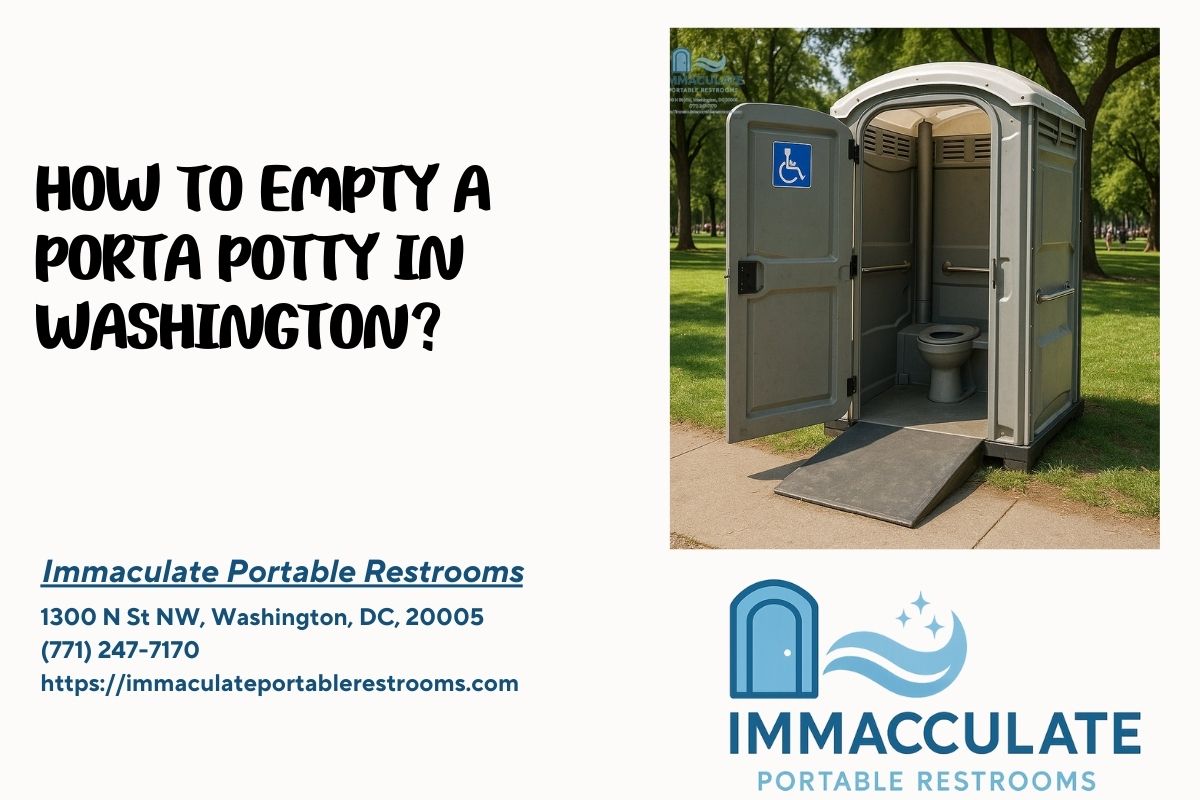
ADA-compliant portable restrooms carry rental rates of $200-$300 daily and $350-$500 weekly, reflecting the specialized construction and increased footprint these units require.
You’ll find these accessible units feature wider doorways, interior handrails, and spacious interiors that accommodate wheelchairs and mobility devices. The premium pricing accounts for transportation logistics, as these units weigh more and require extra clearance for placement.
You’re investing in legal compliance and inclusive access—federal regulations mandate ADA units at public events and construction sites. When budgeting, factor in delivery fees, which are typically higher due to the unit’s dimensions.
Smart planning means ordering early, as ADA-compliant inventory moves quickly during peak seasons. You’ll enhance value by confirming exact placement requirements before delivery.
Luxury restroom trailers command premium rates of $1,500-$3,000 for weekend rentals and $2,500-$5,000 for week-long events, positioning them at the top tier of portable sanitation options.
These mobile facilities provide climate-controlled environments with upscale amenities that rival those of traditional indoor restrooms.
Your investment covers:
You’ll find these trailers vital for corporate events, weddings, and VIP gatherings where guest experience matters.
The pricing reflects transportation logistics, maintenance requirements, and the sophisticated infrastructure these units provide for discerning clients.
Standard porta potty rentals bundle essential services and features into a straightforward package that covers your basic sanitation needs.
You’ll receive delivery, placement, and pickup at your specified location. The unit includes a toilet seat, urinal, toilet paper dispenser, and hand sanitizer station.
Weekly servicing is standard for rentals lasting more than 7 days, including waste removal, tank replenishment, and restocking supplies.
Most packages incorporate damage waivers and regular maintenance checks to guarantee functionality throughout your rental period.
You won’t pay extra for standard placement on accessible, level ground. However, supplementary services like frequent servicing, improved cleaning protocols, or specialized placement requiring equipment may incur additional charges.
Understanding these baselines inclusions helps you budget accurately and identify when upgrades align with your project’s requirements.
Understanding what’s included in your rental sets the stage for managing the logistics that get those units to your site.
Immaculate Portable Restrooms handles the complete deployment cycle, streamlining your project timeline and eliminating coordination headaches.
Our delivery and setup process includes:
You’ll receive confirmation notifications at each stage, allowing you to focus on your core operations while we manage the sanitation infrastructure.
This systematic approach reduces hidden costs and prevents scheduling conflicts.
Once your units are on-site, maintaining sanitary conditions requires consistent servicing that prevents odor buildup, waste overflow, and supply depletion.
Standard service intervals occur weekly for construction sites and multi-day events, though high-traffic locations need twice-weekly visits. Each service includes waste tank pumping, interior cleaning with EPA-approved sanitizers, hand sanitizer refills, and toilet paper restocking.
You’ll pay $75-$125 per service visit, depending on the unit type and frequency. VIP trailers require specialized cleaning procedures that cost $150-$200 per service.
Smart monitoring systems now track usage patterns and supply levels, optimizing service schedules and reducing unnecessary trips. This technology-driven approach cuts costs while ensuring units never reach capacity.
For events lasting more than 3 days, factor in servicing costs into your total rental budget—it’s non-negotiable for maintaining acceptable hygiene standards.
Beyond the base rental and servicing costs, several supplementary charges can inflate your final invoice if you’re not prepared. Understanding these potential fees helps you budget accurately and avoid surprises when the bill arrives.
Common extra charges include:
At Immaculate Portable Restrooms, we’ll outline all applicable fees upfront, ensuring transparent pricing for your Washington, DC project.
Regular servicing covers basic maintenance, but your project’s demands may require more frequent attention that impacts your bottom line.
Standard rental agreements include weekly cleanings, yet high-traffic events or job sites often need mid-week servicing at $75-$150 per visit.
You’ll face emergency service charges when units require immediate attention—expect $100-$200 premiums for same-day responses.
Winter operations in Washington demand winterization services ($50-$100 per unit) to prevent freezing. High-volume usage sites may need damage repairs or accelerated-wear replacement, typically billed at $85-$125 per hour.
Smart scheduling prevents unnecessary charges. Track your usage patterns, coordinate servicing with actual needs rather than fixed schedules, and communicate site conditions upfront.
This data-driven approach optimizes your maintenance costs while ensuring consistent unit performance.
While porta potty units themselves carry straightforward rental costs, placement locations often trigger municipal fees that catch budget planners off guard.
Washington’s regulatory framework requires specific permits depending on your site’s characteristics and duration of use.
Key permit and placement considerations:
We’ll help you navigate Washington’s permitting landscape efficiently.
Unless you’ve factored contingency costs into your rental budget, unexpected charges for damage, relocations, or extended use can derail your financial planning.
Damaged units typically incur repair fees ranging from $150 to $500, depending on severity. You’ll face relocation charges of $75 to $200 per move if you need units repositioned mid-service. Overtime fees apply when you exceed your rental period—expect daily rates of $15 to $35 per unit beyond your contract term.
At Immaculate Portable Restrooms, we’ve implemented digital damage documentation and GPS tracking to minimize disputes over these charges.
You’ll receive photographic evidence and precise timestamp data, ensuring you’re only billed for legitimate damages or service modifications. Our transparent fee structure lets you budget accurately while maintaining flexibility throughout your project timeline.
Your event type directly determines your porta potty expenditure, with costs varying by as much as 400% between basic site needs and premium hospitality scenarios.
Cost breakdown by application:
Volume discounts typically begin at 10+ units, reducing per-unit costs by 15-30%.
Construction site porta potty requirements hinge on three regulatory benchmarks: OSHA mandates one toilet per 20 workers, local permits specify minimum service frequencies, and project timelines determine whether you’ll need monthly rentals or long-term contracts.
| Project Duration | Worker Count | Monthly Cost Range |
|---|---|---|
| 1-3 months | 10-20 workers | $175-$250 |
| 3-6 months | 20-40 workers | $300-$500 |
| 6-12 months | 40+ workers | $600-$900 |
| Long-term (12+ months) | 50+ workers | $800-$1,200 |
| High-rise projects | Any count | Add $150-$300 for crane placement |
You’ll optimize costs by negotiating volume discounts for multiple units and scheduling service intervals that match your crew’s actual usage patterns rather than defaulting to standard weekly cleanings.
Private event porta potty planning demands a different calculation than construction projects—you’re balancing guest comfort expectations against rental duration measured in hours rather than months.
Your Washington event requires strategic unit deployment based on attendance metrics and duration.
Standard pricing factors include:
You’ll optimize your budget by confirming exact headcount and selecting appropriate amenity levels for your guest profile.
Large-scale public events multiply your porta-potty requirements exponentially while introducing regulatory compliance layers that private functions don’t face.
You’ll need one unit per 50 attendees for festivals lasting less than 4 hours, increasing to one per 40 for full-day events. DC’s Department of Consumer and Regulatory Affairs mandates specific accessibility standards—budget $275-$350 per ADA-compliant unit versus $150-$200 for standard models.
Festival logistics demand strategic placement: high-traffic zones near stages, food vendors, and entry points.
You’ll want handwashing stations ($85-$125 each) positioned at 150-foot intervals. Multi-day events require daily servicing at $75-$100 per unit.
Smart planning consolidates deliveries and reduces transportation costs. Immaculate Portable Restrooms provides site assessments that optimize unit distribution while ensuring regulatory compliance.
While porta potty rentals represent unavoidable event costs, you’ll capture 20-40% savings through strategic booking decisions. Reserve units 4-6 weeks ahead during peak season (April-October) to secure competitive rates.
Mid-week deliveries cost less than weekend setups, and extended rental periods reveal volume discounts.
Price optimization strategies:
At Immaculate Portable Restrooms, we’ll provide transparent pricing breakdowns that eliminate hidden charges and enhance your budget efficiency.
Because porta-potty availability fluctuates with seasonal demand, you’ll need to reserve your units at least 30-45 days before your event date to guarantee both selection and pricing stability.
Early booking locks in lower rates before peak-season surcharges take effect, typically saving 15-25% compared to last-minute rentals. You’ll also secure access to premium units with improved features rather than settling for basic models when inventory runs low.
Advanced reservations enable our logistics team to optimize delivery routes, reducing fuel costs and passing the savings directly to you.
Moreover, you’ve got the flexibility to adjust quantities within the initial two weeks of booking without penalty. For construction projects spanning multiple months, scheduling deliveries during your primary planning phase ensures uninterrupted service and prevents workflow disruptions caused by unit shortages.
Most Washington porta-potty rental companies require deposits ranging from 25-50% of your total rental cost. You’ll typically receive this back after your event. We’ve streamlined our deposit process digitally, making it faster and more transparent for you.
You can pay Immaculate Portable Restrooms using credit cards, debit cards, checks, or electronic transfers. We’ve streamlined our payment system to offer you maximum flexibility and convenience, ensuring your rental process is efficient from booking through final payment.
Yes, you can cancel or reschedule your rental. We’ll work with you to adjust your booking based on availability. Contact us as early as possible to avoid potential fees and guarantee we accommodate your updated timeline efficiently.
You’ll typically save 10-15% when renting multiple units from us. We’ve designed volume-based pricing tiers that reward larger orders, helping you optimize your budget while ensuring adequate restroom coverage for your event or project site.
You’ll want to book 2-4 weeks ahead for standard events, but reserve 6-8 weeks early for peak season (April-October) or large gatherings. Early booking locks in competitive rates and guarantees you’ll secure modern, well-maintained units.

© 2026 Immaculate Portable Restrooms. All Rights Reserved.